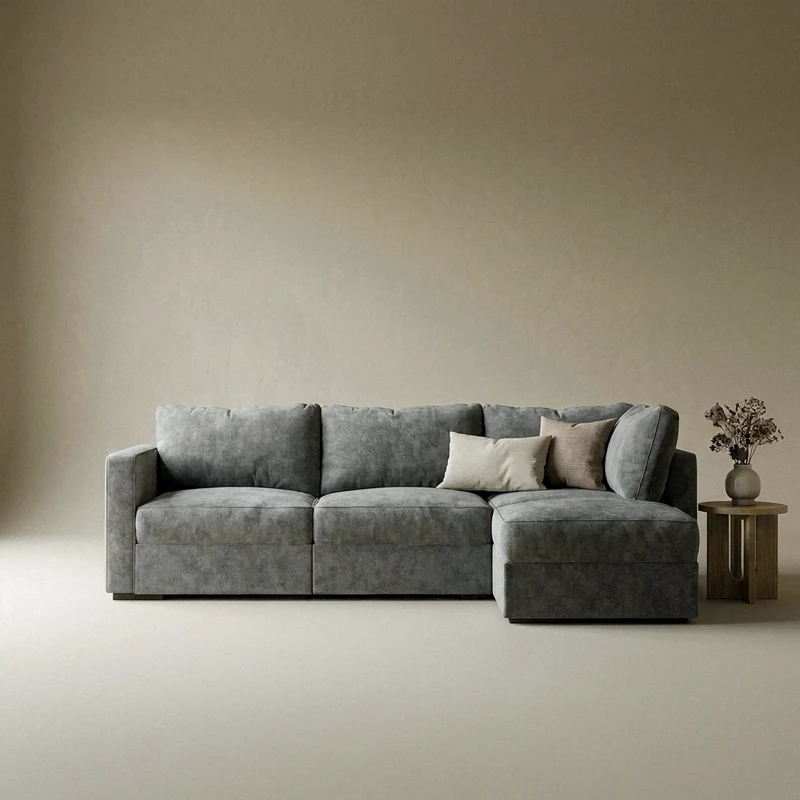
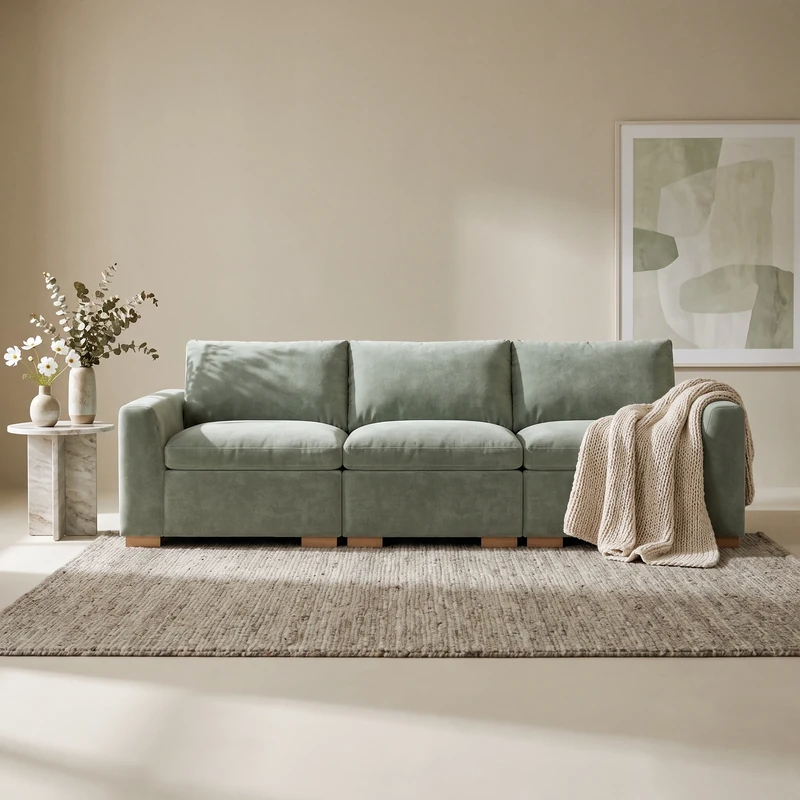
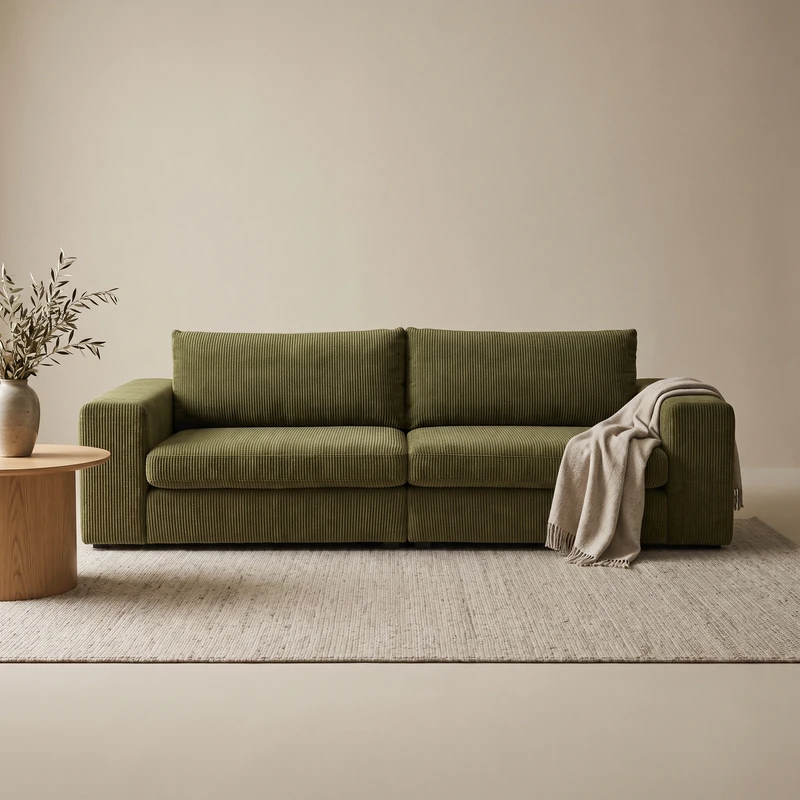



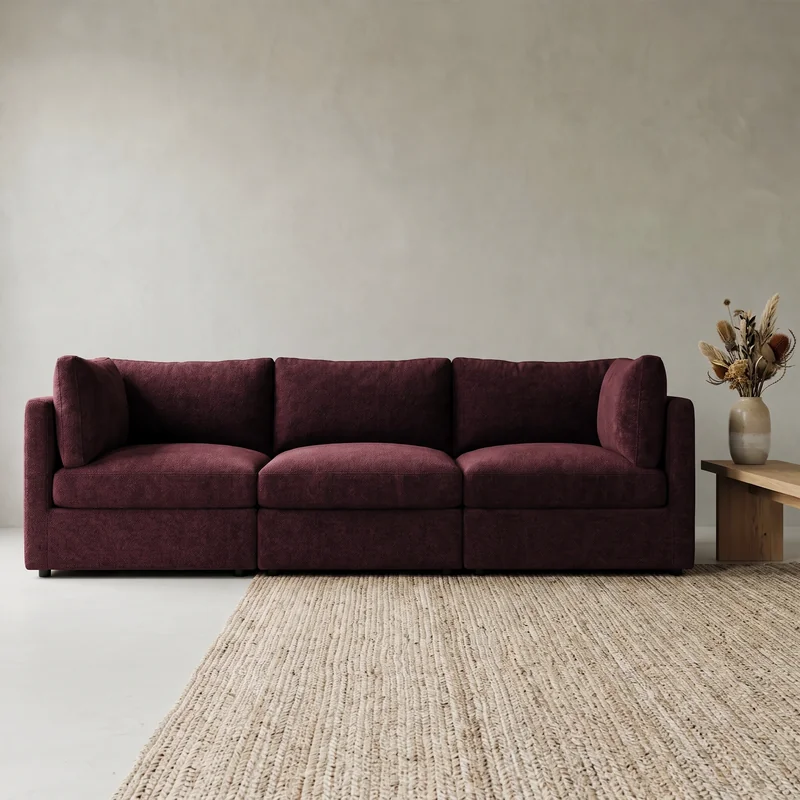
.webp)







10 Modular Furniture Brands Designed to Fit Any Space


Subscribe
The Inside Look
Thank you! You're now subscribed to the Inside Look.
Oops! Something went wrong while submitting the form.
We independently select everything we recommend. When you buy through our links, we may earn a commission. Learn more ›
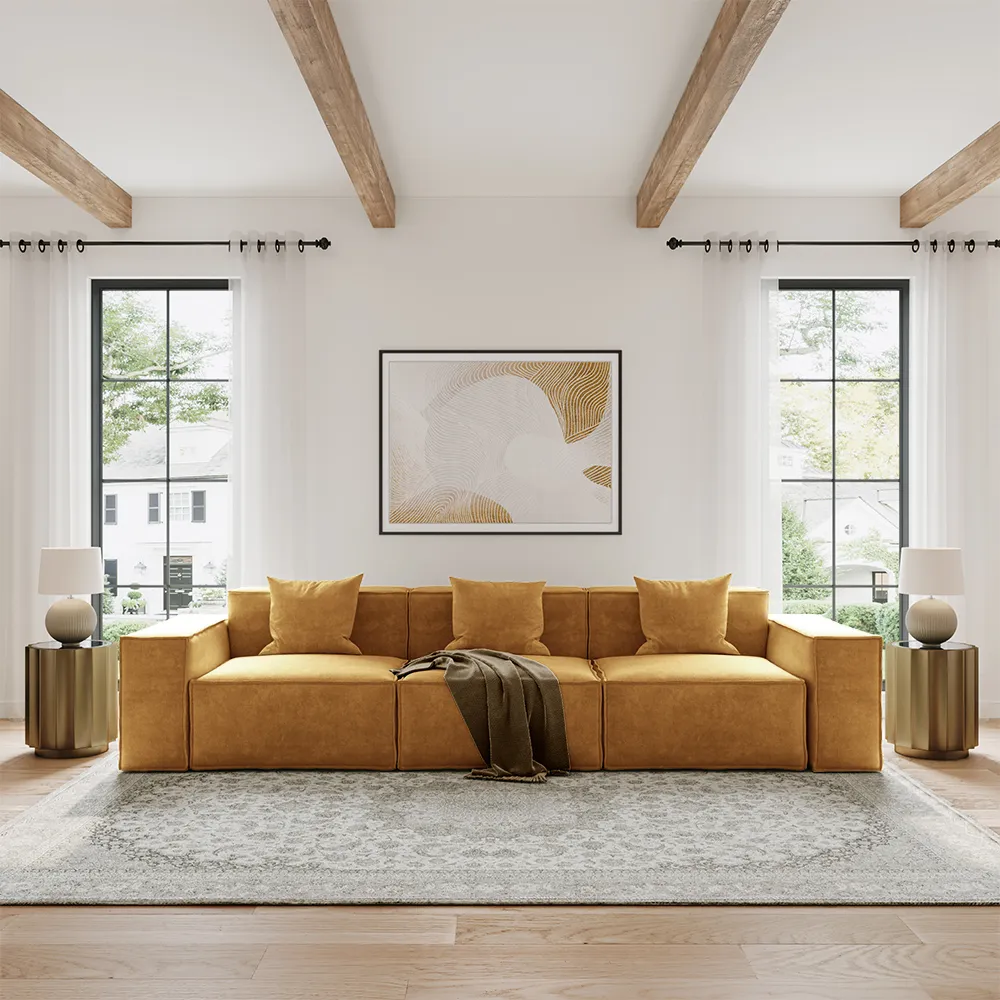

A modular sofa is the only kind that can change its mind after you buy it. Add a seat when you move somewhere bigger. Pull the chaise to the other end when the TV wall moves. Wash the cover the toddler got to, instead of buying a whole new sofa.
We spent months living with fourteen of them. Some earn that promise. On the rest, modular is a marketing word for "ships in boxes."
One thing to settle before you shop, because the words get used loosely. A modular sofa is built from matching pieces. You can rearrange them, add to them, or take the whole thing apart on moving day. Push those same pieces into an L or a U and people call it a modular sectional — same furniture, different shape.
What it isn't is a one-piece sectional. There the shape is fixed the day you order, and more of the money goes into the frame. If that's what you're after, our best sectional sofas guide covers them. Our best couches roundup goes wider still.

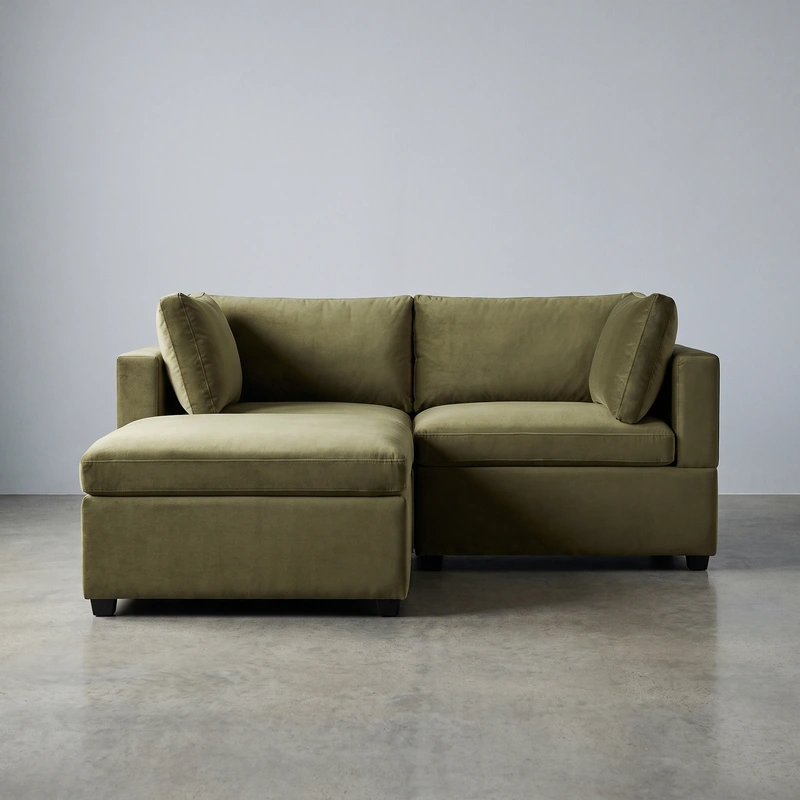
If you're buying one modular sofa from this list, make it the Albany Park Kova. It scored 9.5 for comfort in our testing, with seats deep enough to nap on but not so deep you have to climb out of them. It arrives in four boxes one person can carry in, so there's no truck crew and no stairwell standoff. The ottoman does two jobs: pushed against a seat it's a chaise, against the wall it's an extra perch for movie night. And when you move somewhere bigger, you add a section instead of buying a new sofa.
There's no sofa lab at Living Cozy, and that's on purpose. A pressure rig can tell you how fast foam compresses. It can't tell you whether the chaise becomes the seat everyone fights over by week three. So we send sectionals to our contributors' actual homes, and they live with them, through movie nights, juice spills, full-speed dog laps, and the occasional dinner party.
Every tested pick on this page went through the same gauntlet:
Tested sofas get scored on a 10-point scale across comfort, durability, design, and value. You'll see those scores in our full reviews, linked from the entries.
We started from every modular sofa we've tested or researched in depth, then held each candidate to the same bar. It has to be genuinely modular, with pieces you can rearrange after you buy, not just a sectional that ships in boxes (fixed sectionals have their own guide). Only one pick per brand. The price is verified live at our latest update, and the return policy is stated plainly in each entry. Hands-on testing ranks first. When a pick earns its slot on research and build quality rather than our own weeks of sitting on it, we say so right in the entry.
Four boxes, almost chest-high, left at the front door by UPS. Our tester’s daughter carried them in on her own. That is the Kova’s whole argument in one image: a sofa this comfortable normally arrives on a truck, with two people and a stairwell problem.
The build is where it gets honest. Legs went on in minutes — four per base — and then the arm and back cushions stopped her cold. Nothing in the box is labelled, so there is no telling an arm from a backrest until you have guessed wrong twice. Watch the assembly video before you start, not after.
What is inside is worth the twenty minutes. A proper box cushion, squared and tailored on day one, 30 inches deep — enough to nap on, firm enough to get out of. Anti-slip backing holds the cushions in place but still lets you lift them to clean underneath. The ottoman is the quiet hero: push it against a seat for a chaise, slide it to the wall for movie night. Every Kova we have tested has landed at 9.5/10 for comfort. Returns run 30 days and shipping is free, and if the room grows later an armless section is $545, a corner $695.
Zip the covers off, cold wash, line dry, zip them back on. That is the entire cleaning routine, and it is the reason the Sactional survives households that would destroy a fixed-cover sofa.
The deeper play is the ecosystem. Lovesac still sells covers and modules for lines it launched years ago, so a discontinued fabric never strands you with a sofa you cannot refresh. More than 150 covers are available and the insert fill is made from repurposed plastic bottles. We have not had a Sactional in for testing ourselves, so the case here rests on that ecosystem rather than our own hands-on time. The price climbs fast once you add sides, and a lot of the fabrics lean practical over plush.
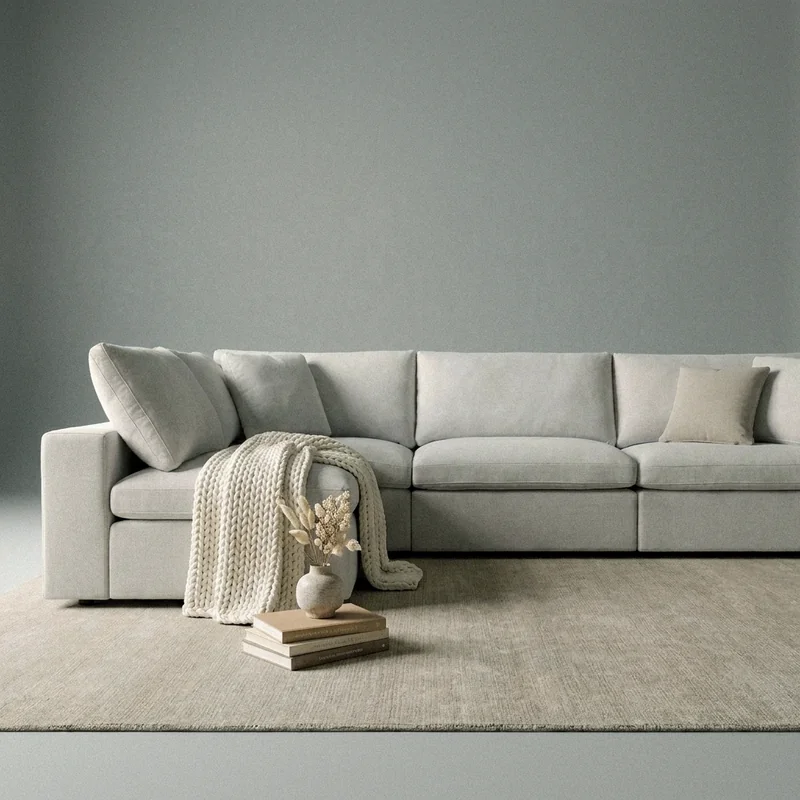
Juice. Muddy shoes. Pillows on the floor. Our tester's kids put the 7th Avenue through all of it and a damp towel handled every round — right up until her husband got chocolate ice cream on it, which took stain remover and patience. That is a more useful stain rating than any number.
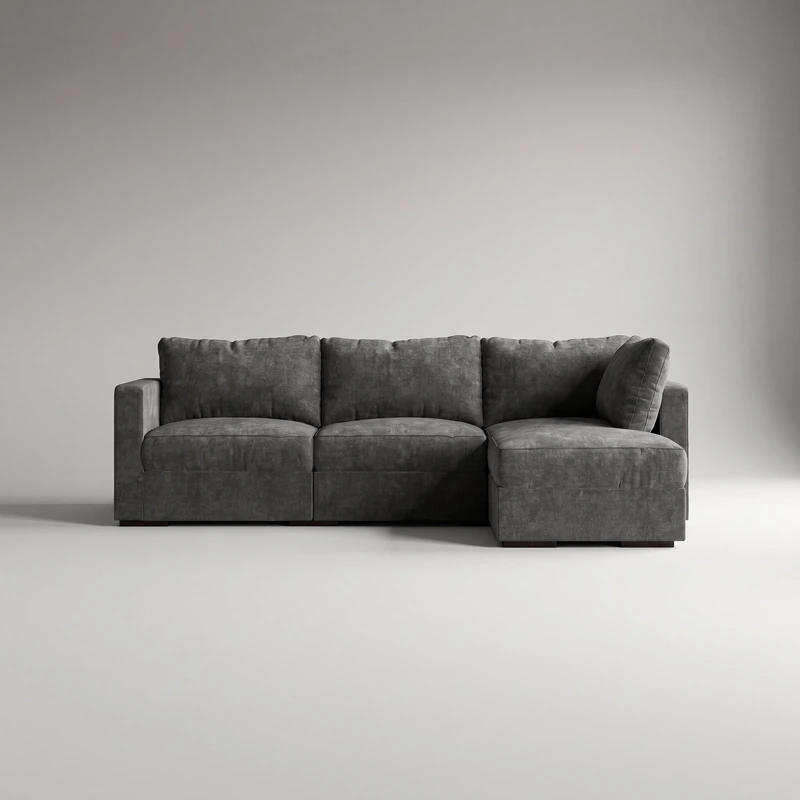
The 4-Seat Open Corner runs 132 inches, so it seats a full household without the pile-up, and the memory-foam seats take your shape rather than propping you up. You pick the back cushions soft, medium or firm when you order — and you can change your mind years later, which is the point of the whole system. Covers are water-repellent and machine washable, which a sofa this social will need.
Delivery is the part nobody mentions. 7th Avenue’s own team carried ours in and snapped it together in about fifteen minutes, then moved the old sofa to the garage unprompted. The vacuum-packed cushions took a day to reach full loft, so do not judge the sit on the first evening. Two to six weeks is the usual wait, though ours ran to a couple of months because the grey was new to the line at the time. Worth knowing: the listed price is a from-price, and the return window is short at 10 days.

Taylor assembled the whole thing solo, on camera, in about fifteen minutes — line the pieces up, slide them together, listen for the click. Her cat Athena started investigating the fabric before the build was even finished, and neither she nor Ajax the dog left a mark on the cream chenille.
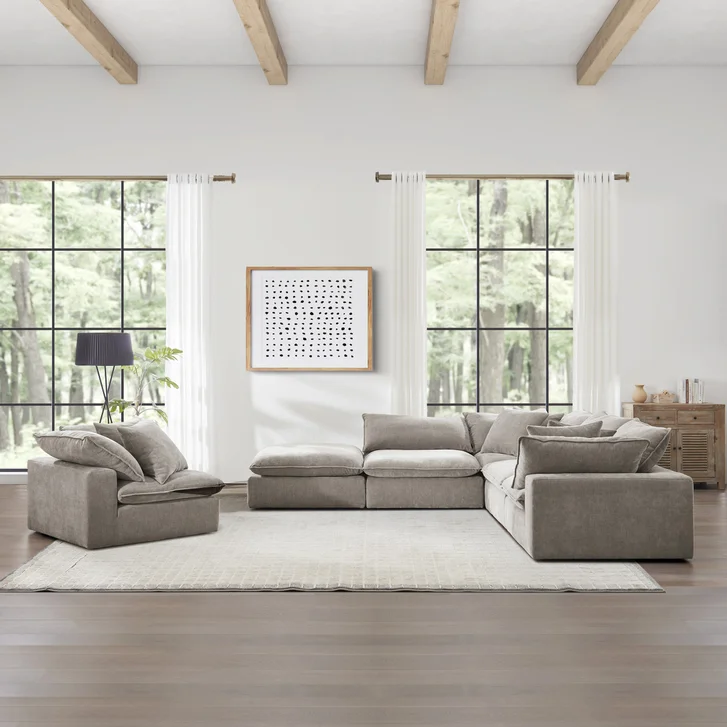
The Bella is built for people who lie down rather than sit up. Oversized pillow-style cushions, an included ottoman that stretches it into a full lounging platform, and storage tops that lift open with no effort at all. Soft and enveloping without bottoming out is the honest description of the pillow option; the box cushion version is a different, firmer sofa, so choose deliberately.
One tip from the build: flip the metal brackets out before you slide the pieces together. One tip from before the build: Bellamia ships free fabric swatches, and on a cream chenille you want them. Fourteen configurations, fifteen colourways, box or pillow cushions, free shipping and a limited lifetime warranty, with Affirm at 0% over twelve months if paying at once is not the plan. Returns run 30 days.
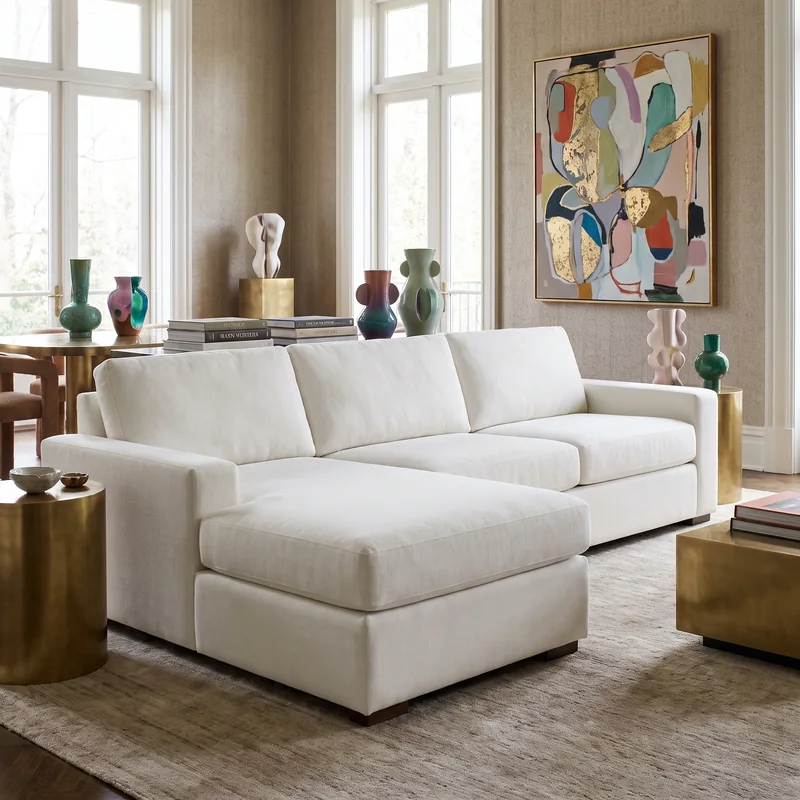
It smells. For about three weeks, anyway — natural latex and wool have an odour when they arrive, not harsh or chemical, just present, and then it is gone completely. That is the honest cost of entry on the only sofa here built to outlast its owner's next two houses.
The payoff is cushion fill that holds its shape for roughly twenty years, about triple standard poly foam. Latex breathes, so you do not overheat, and it naturally resists dust mites and mould. Medley handcrafts each piece in the USA from GOLS-certified organic latex and OEKO-TEX wool, and backs the frame for life.
Two things our tester wants you to know before the truck arrives. The arms are wide, so a sofa that measures 88 inches gives you about 72 inches of usable seat — fine for two sprawling, tight for three guests. And it slides on hardwood and tile; a non-slip pad under the feet fixes it in a minute, but nobody tells you to buy one. The pale colourways show dirt, which is the trade for how good they look in daylight. This is the chaise build rather than the full corner, the version most rooms actually need and a long way below what the corner costs. Thirty-day trial, free returns.

Ordered on 12 May, delivered on 18 May. Six days, for a sofa that costs less than most people's mattress. The Field is the one on this list that makes the least noise about itself and the fewest excuses for its price.
It clicks together without a workshop and comes apart just as fast on moving day, which matters more than it sounds when the sofa outlives the apartment. The 4-Piece Lounger adds a proper lounging end to the standard Field footprint. Ours has lived in the corner of a Seattle apartment next to the window, and it suits a minimal room without insisting on one.
Be honest with yourself about the seat. At 21 inches it runs shallower and firmer than the loungers above it, and our tester needed a couple of weeks to stop expecting to sink. It is not built to swallow you — which is exactly right if you work from your sofa, and wrong if you want to disappear into it. The profile is low too: a 16-inch seat height and a 28-inch frame. Add the ottoman if you want somewhere to put your feet, because the sofa alone will not offer it. Returns run 30 days and shipping is a flat rate rather than free.
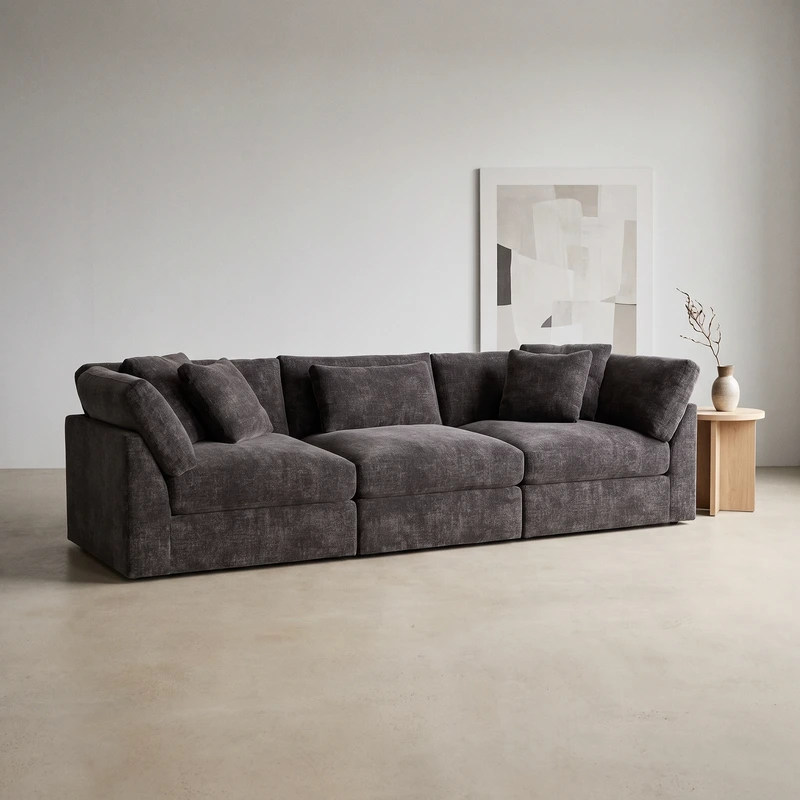
Karina Fernandez lived with the Get Together for a month in her Vancouver apartment — working from it, napping on it, and at one point setting an adjustable dumbbell on a seat cushion to see whether it would bowl. It dipped under the weight and stayed flat either side of it. The finding that mattered most, though, was slower: the cushions softened over the first few weeks without losing their shape, so it got more comfortable rather than saggier. Read the full Sundays Get Together review.
This is the modular sofa for people who want support rather than something that swallows them. It sits you upright, and it is easy to get out of after a long evening, while the 26.5-inch seat is still deep enough to stretch out on. The LiveLife performance weave buys you a couple of minutes on a spill rather than immunity — Karina’s coffee beaded long enough to fetch a cloth, and the cover then washed clean with no trace. Two honest notes: the feather-fibre cushions rustle softly whenever you shift, and across three modules you can feel the seams when you lie down.
Eight ways to build it — loveseat, 3-seater, corner, pit, U-shape and more — which is rare this far up the price list. Most sofas this expensive commit you to one shape on the day you order, and you live with that decision for a decade. The Like Butter lets you change your mind later. That is why it sits on a modular list rather than a luxury one.
The name is doing real work, and we can put numbers behind it. BenchMade runs the same cushion build through the whole line, and we have had four of them in testers’ homes: the Archie sectional scored 9.0 for comfort and 9.5 for durability, the Laguna 9.1, the Skinny Fat 8.9. Nothing in the range has come in under 8.2. That is the sit you are paying for — dense and deep without swallowing you — and it is why this earns a splurge slot rather than just occupying one. Custom-built to order in the USA, with a lifetime frame warranty on top. Check the returns before you commit, though, because the headline number flatters them. You get 14 days for a full refund, then 90% back out to 100 days. On a sofa this expensive that last 10% is real money: on a $5,000 order it is $500 to change your mind in week three.
Low back, clean line, no visual weight. The Beta is what you buy when the sofa needs to make the room look considered rather than announce itself. At 98 inches it does that in a mid-range apartment, not just a showroom floor. Most modular sofas read as furniture first and design second. This one flips the order.
We have not lived with the Beta itself, so here is what we can stand behind: three other Article pieces have been through testers’ homes and the pattern holds. The Leigh corner sectional scored 8.5 overall, with 8.6 for comfort and 8.5 for durability. The Sven came in at 9.0 with a 9.1 on both. Value lands in the low 8s every time, which is the honest read on Article — the design is sharper than the price suggests, and the build is solid rather than heirloom. Cushions here sit on the structured side, and that is what makes the low profile work; sink-in foam would collapse the line it is selling. Modules can be added later as the room or the household grows. Returns run 30 days, which is tight for a sofa you are buying on looks, so measure the wall first.
Seven boxes, each one numbered and labelled with exactly what is inside. No printed instructions in the carton — the build lives on a YouTube video — and within an hour of dragging the boxes in, our tester was sitting on it.
That is the Ciello’s real skill: it gets into homes other sofas cannot. Fifth-floor walkups, narrow hallways, small lifts. Reckon on five to ten minutes per seat to build, and felt pads come in the box for hard floors. Start with the snug two-seater and add a seat or a corner when you move somewhere bigger — extra seats can be ordered on their own at any point, and the configurator runs to more than nine hundred combinations, with a 360-degree view and an AR preview so you can stand it in your actual room before paying.
Two things worth knowing before you buy. The back cushions slide a little in daily use and want a fluff. And the seam between modules is less comfortable than the middle of a cushion, so size up rather than squeezing an extra person on. Returns run 30 days.
A chaise is where a modular sectional either earns its keep or becomes a very expensive place to put laundry. The Tatum gets the proportions right: three seats plus a chaise long enough to actually stretch out on without swallowing the rest of the sofa.
Interior Define builds each one to order, so you are choosing from dozens of fabrics rather than three safe neutrals, and the whole thing is backed by a 365-day return window — the most generous policy on this list by a wide margin. We have not had one in for testing, so this pick rests on the build spec and that policy rather than our own hands-on time. Made-to-order has its costs: weeks of waiting, and prices above comparable in-stock sofas.

A 109-inch one-piece sectional does not go up a service elevator. It does not go up a stairwell either — it gets stuck on a landing and goes back on the truck. Our tester's Landon went up in pieces and came together in the living room, which is the entire case for modular in one sentence.
Three months in, the picture is clear. The seats softened from an 8 to about a 7.5 over the first sixty days — only the seats, never the backs or the arms — and it sits firmer than the medium-firm label suggests. A 70-pound dog did full-speed laps across it and the fabric shows nothing. A coffee spill and a machine wash of the cover left no mark either, and the cushions have never once needed fluffing.
Put a full mug on one seat, have someone drop hard onto the far seat, and the mug does not move: the modules isolate motion in a way a single frame cannot. You control size, fabric and seat depth, it ships in about six weeks, and DreamSofa gives you 100 days to send it back.
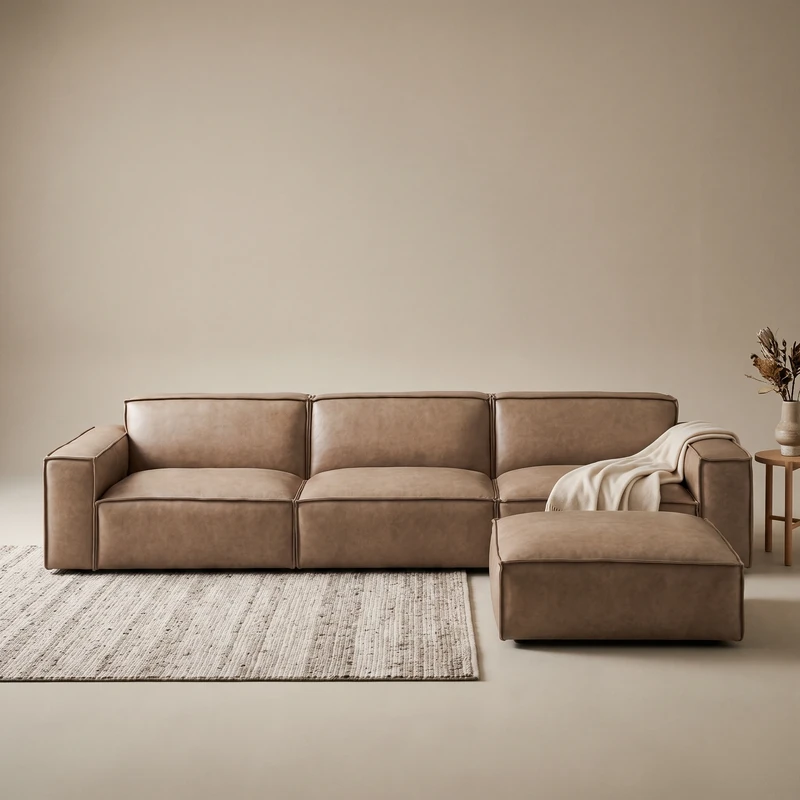
Leather and modular almost never appear in the same sofa. Leather wants a fixed frame; modular wants seams. The Castlery Jonathan is the exception that makes it work — a movable ottoman and snap-in clips give it fifteen configurations without the top-grain looking like it was cut up to allow it.
Top-grain leather softens and gains character rather than cracking, and it quietly solves the modular sofa’s worst problem: spills wipe off instead of soaking into a seam. The profile is low and modern rather than old-money den. It asks for conditioning a couple of times a year, and Castlery sells the individual Jonathan modules separately if you want to extend the layout later.
Read the returns before you order, because this is where Castlery is expensive. You get 30 days, but a 20% restocking fee comes off the refund, and there is a $50 per-item repackaging charge if you did not keep the boxes. On a sofa at this price that is most of a thousand dollars to change your mind — so treat it as a decision, not a trial.
Lift the seats and there is a bay 31 inches wide, 64 deep and 6 tall hiding under an 88-inch sofa. That is spare bedding, board games, or the entire toy situation, gone.
The compact frame is the other half of the trick. At 88 inches the Holt fits rooms that reject full-size corner sofas, which is exactly where hidden storage matters most — the smaller the room, the fewer places there are to put a spare duvet. It cuts both ways: this is seating for two or three, not a crowd, and the bay is wide and deep but only six inches tall, so it swallows bedding and board games and refuses anything with height.
We have not lived with the Holt ourselves, so treat the comfort read as informed rather than tested. What we can state flatly is the part that usually goes wrong on storage sofas: Joybird gives you 90 days to send it back, which is a full season to find out whether you actually lift those seats or just walk past them.
The single best reason to buy modular has nothing to do with rearranging your living room. It is that the sofa gets into the room at all. One of our testers watched a 109-inch sectional go up a high-rise in pieces, and put it plainly afterwards. A one-piece sofa that size does not fit a service elevator. It does not fit a stairwell. It gets stuck on a landing and goes back on the truck.
Measure the tightest point on the route before you measure the wall — the stairwell turn, the lift, the front door at an angle. Every sofa here ships in cartons, but the count varies a lot: seven labelled boxes for the Cozey Ciello, four chest-high ones for the Kova. If flat-pack delivery is the whole reason you're shopping, our sofa in a box brands guide covers the category properly.
Two quite different things get sold under the same word, and the difference decides whether "add a piece later" is a real promise or just a nice thought.
A set is a fixed group of modules. You can rearrange what you've already got — swap the chaise to the other end, pull a seat out when people stay over — but the line itself is finished. A system stays open. The brand keeps making the pieces, so the two-seater that fit your rental becomes a corner unit in a house. Lovesac built a whole business on this and still sells covers and modules for lines it launched years ago. Most brands quietly stop after a season or two.
If you just want a rearrangeable couch for the next couple of years, a set's fine, and it's usually cheaper. If you're buying a modular couch system to grow into, ask the brand one thing before you pay: how long will these pieces stay available? A vague answer is an answer.
This is where the money actually goes.
Natural latex holds its shape for around twenty years, roughly triple standard poly foam, and breathes well enough that you do not overheat on it. It is the most expensive option and it has a genuine break-in cost: our Medley Rio arrived with a natural-materials smell that lingered about three weeks before disappearing entirely.
High-density foam is the sensible middle. Expect it to soften rather than collapse — our DreamSofa Landon went from an 8 to about a 7.5 over its first sixty days, seats only, never the backs or arms. That is normal and it is not a defect.
Feather and down blends are the plushest and the highest maintenance. They need fluffing, and some make a faint crinkling sound as you move.
Sofas here split into two camps and the wrong choice is the most common regret.
If you sit — upright, with people, in a room where conversation happens — a 21 to 25 inch seat is right. The Burrow Field and the Sundays Get Together are built for this.
If you lie down, you want depth and softness: the Bellamia Bella, the DreamSofa Landon, the Medley Rio. If it is that sink-in cloud feel you are chasing, start with our cloud couch alternatives, or go straight to our deep sofas guide. One caution from testing: deep seats and tall arms do not always nap well together. The Landon's 25-inch arm is too tall to use as a pillow and kinks your neck.
If comfort is the only thing you're weighing and the modular part is negotiable, our most comfortable couches guide ranks across every style, not just this one.
Three things, none of which brands advertise.
Seams. The join between modules is the least comfortable place to sit. Size up rather than squeezing an extra person onto a three-seater.
Drift. Modules slide on hard floors. Most brands ship felt feet or anti-slip pads; ask before you assume, and add a rug if the room is tile or polished concrete.
Discontinuation. Expanding later only works if the line still exists. Lovesac is the outlier that keeps selling covers and modules for years after launch; most brands do not commit to that, so if the plan is to add pieces in two years, ask before you buy.
"Washable covers" covers a lot of ground. Fully removable and machine washable — zip off, cold wash, line dry — is rare and mostly a Lovesac and Bellamia story. Performance weaves are far more common: they do not come off, but they repel liquid long enough to grab a towel. In our testing those handle water, juice and sippy-cup spills easily. Grease is the exception. Chocolate ice cream beat a performance fabric that shrugged off everything else. If the weave itself is what you're weighing up, our performance fabric sofas guide explains what the mills actually mean by the term.
Yes, and the best ones now match traditional sofas outright. The one place you feel the modularity is the seam between modules, which is why we suggest sizing up. Otherwise it is a structural decision, not a comfort compromise. Our tested picks scored between 9.2 and 9.5 out of 10.
A sectional is a multi-piece sofa that assembles into one fixed shape, usually an L or a U. A modular sofa is built from matching pieces you can swap, add to, or rearrange. Every modular sofa can be arranged as a modular sectional; not every sectional is modular. If a fixed shape suits your room better, our best sectional sofas guide covers those.
Good ones last a decade or more, and cushion fill matters most. Natural latex keeps its shape for roughly twenty years, high-density foam softens gradually rather than failing, and feather blends need the most upkeep. Frames are rarely the problem — several brands here carry lifetime frame warranties.
Usually, but confirm it before you buy rather than after. The constraint is discontinuation: if a brand retires your line or fabric, matching pieces stop existing. Lovesac's whole model is built around never letting that happen; most brands make no such promise.
They are one of the best options available. A modular sofa ships in cartons that fit narrow stairs, tight hallways and small lifts. You can start with two seats and add more when you move. The Cozey Ciello and the Joybird Holt are the two picks here built for tight rooms, and we have a whole guide to couches for small living rooms.
We keep this list strict. A sofa earns a slot by what it does in a real room, not by what the spec sheet promises.
What's new:
Still going strong: the Albany Park Kova, the Lovesac Sactional, the Medley Rio and the Bellamia Bella all held their places.
At Living Cozy, we work closely with furniture brands and industry professionals to create comprehensive guides to help you find the perfect pieces for your home. To explore the best modular sofas, we spoke with a number of interior design and modular sofa experts, including:


About Living Cozy
Expert writers and contributors